

TABLE OF CONTENTS
- Introduction
- The Shocking Basis of the Trump Nigeria Military Threat
- Nigeria’s Firm Pushback on Religious Intolerance Claims
- Deconstructing Conflict: More Than Just a Religious Divide
- The Geopolitical Ramifications for US-Nigeria Relations
- Conclusion: A New Era of Conditional Diplomacy
The Essential: The Trump Nigeria Military Threat Over Christian Persecution
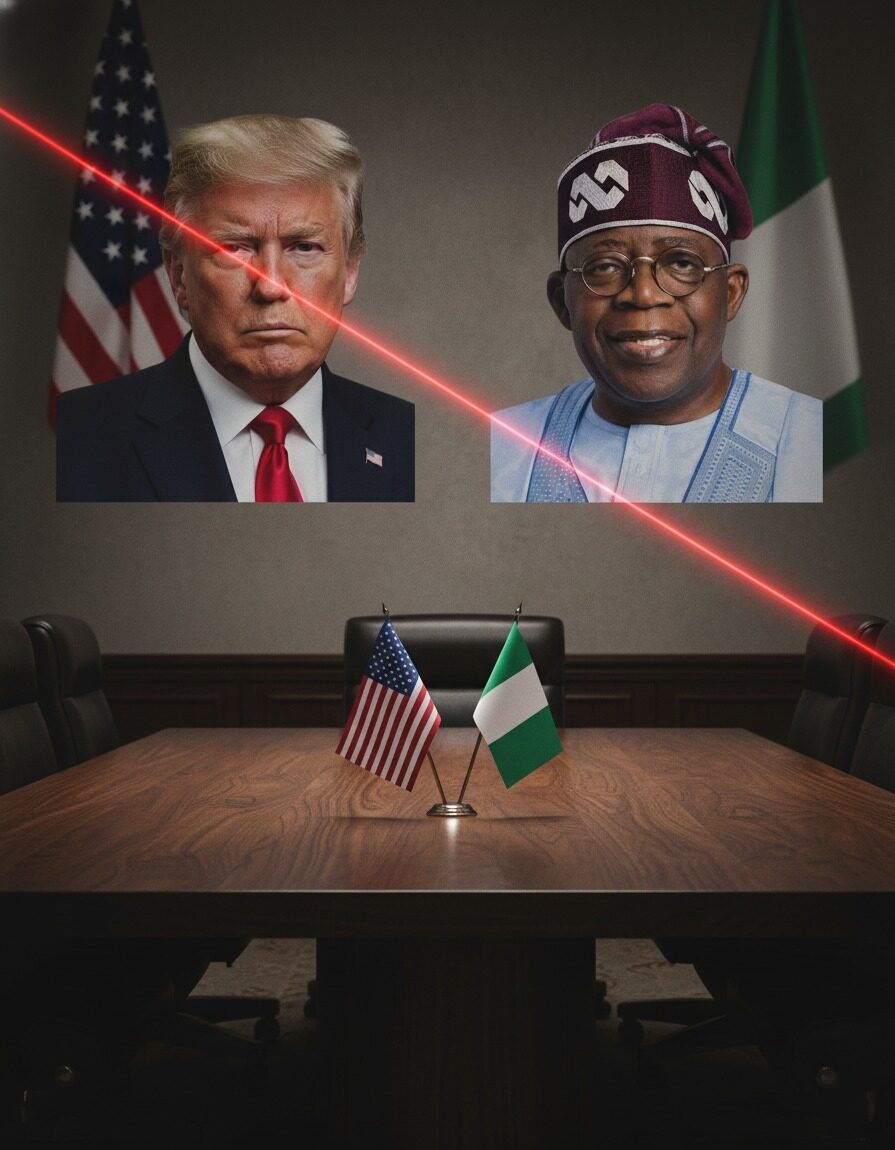
In a drastic escalation of US foreign policy, President Donald Trump announced he has ordered the Pentagon to initiate planning for potential military action in Nigeria. The threat to go into the West African nation “guns-a-blazing” is directly tied to his assertion that the Nigerian government is failing to contain what he calls the “existential threat” facing Christians. The Trump Nigeria military threat immediately sent shockwaves across diplomatic channels, underscoring a newly aggressive stance on religious freedom enforcement.

The President’s statement, posted on social media, declared an immediate halt to all US aid and assistance should the Nigerian government “continue to allow the killing of Christians.” This ultimatum was accompanied by a clear instruction to the “Department of War” to prepare for “fast, vicious, and sweet” action to wipe out the “Islamic Terrorists who are committing these horrible atrocities.” This move followed the administration’s formal designation of Nigeria as a “Country of Particular Concern” (CPC) for its alleged religious freedom violations.
The Shocking Basis of the Trump Nigeria Military Threat
The designation and subsequent military threat are based on claims that Christianity is under severe attack by radical Islamists. Weeks earlier, Senator Ted Cruz had publicly urged Congress to designate Nigeria a religious freedom violator, citing “Christian mass murder.”
While the violence in Nigeria is undeniable, analysts suggest the picture is far more complex than a simple Christian-Muslim conflict. Nigeria, a country estimated to have ~230 million people, is almost evenly divided between Christian and Muslim populations [Updated: World Population Review, 2025-06-01]. Insecurity stems from multiple, overlapping conflicts: the long-standing terror campaign by Boko Haram, secessionist movements, ethnic clashes, and the deadly competition over dwindling resources between nomadic herders and farmers.
[Updated: Council on Foreign Relations, 2025-09-15] A significant portion of victims of armed groups, particularly in the Muslim-majority north where most attacks occur, are in fact Muslims themselves, targeted by extremist groups they deem insufficiently pious.
Nigeria’s Firm Pushback on Religious Intolerance Claims
The announcement triggered an immediate and firm response from Nigerian President Bola Ahmed Tinubu. On the same day, President Tinubu issued a statement pushing back forcefully against the characterization of Nigeria as religiously intolerant.
“Religious freedom and tolerance have been a core tenet of our collective identity and shall always remain so,” President Tinubu stated. He emphasized that the country has constitutional guarantees to protect citizens of all faiths and actively opposes religious persecution.
Kimiebi Ebienfa, a spokesperson for the Ministry of Foreign Affairs, reiterated this commitment, stating, “The Federal Government of Nigeria will continue to defend all citizens, irrespective of race, creed, or religion. Like America, Nigeria has no option but to celebrate the diversity that is our greatest strength.”
Expert Insight: “The challenge for US foreign policy here is balancing the legitimate concern for religious minorities with the necessity of maintaining a counter-terrorism partnership,” says Dr. Helen Okafor, a geo-political analyst. “Threatening military action alienates a key ally and ignores the multi-layered socio-economic drivers behind Nigeria’s internal conflicts.”
Deconstructing Conflict: More Than Just a Religious Divide
The history of US engagement on this issue is mixed. Nigeria was first placed on the CPC list in 2020 by the US State Department but was notably removed in 2023 to foster better diplomatic ties, a move seen by observers as a political effort leading up to Secretary of State Antony Blinken’s visit.
The current Trump Nigeria military threat risks overturning years of delicate diplomatic engagement. A clear example of the human-level cost of internal conflict is the displacement of over 3.2 million Nigerians due to ongoing violence, regardless of religious affiliation [Updated: UN OCHA Report, 2025-10-10]. The US threat to cut aid further destabilizes a humanitarian situation already stretched thin by internal security crises.
Related: Understanding the Complexity of Farmer-Herder Clashes
The Geopolitical Ramifications for US-Nigeria Relations
The threat of military intervention—even in the planning stages—puts immense strain on US-Nigeria relations, which have traditionally been strong on counter-terrorism efforts against groups like Boko Haram. For one Nigerian Nobel laureate and Trump critic, Wole Soyinka, the tension is personal; his US visa was reportedly revoked days after the threat, further complicating the relationship between the two nations.
If carried out, this action would be the first of its kind, transforming a diplomatic issue into a kinetic military engagement without clear international consensus. The US military’s presence in Africa is already a sensitive topic, and the Trump Nigeria military threat could provoke a backlash across the continent.
The credibility of America’s commitment to religious freedom is often judged by the consistency of its application, a factor now in question given the focus solely on Christian persecution without mentioning the majority of Muslim victims.
Conclusion: A New Era of Conditional Diplomacy
The Trump Nigeria military threat represents a sharp departure from traditional US foreign policy, favoring immediate, high-pressure action over sustained diplomacy. While the goal of addressing violence against religious groups is vital, the approach of threatening military force and cutting aid risks further destabilizing a pivotal African ally. The world watches closely to see if this instruction to the Pentagon turns into concrete action, fundamentally reshaping the security landscape of West Africa. The future of religious freedom in Nigeria now hangs in the balance, contingent on the next moves of both the US and Nigerian leadership.
❓ FAQ SECTION
1. Human-readable FAQ block
Q: Why did President Trump issue a military threat against Nigeria? A: President Trump issued the Trump Nigeria military threat after designating the country a “Country of Particular Concern,” citing the Nigerian government’s failure to stop the alleged mass slaughter and “existential threat” faced by Christians from radical Islamists. He coupled the threat with an order to halt all US aid and assistance.
Q: What is a “Country of Particular Concern” (CPC) designation? A: A CPC designation is a formal classification by the US State Department for nations that engage in or tolerate “systematic, ongoing, and egregious violations of religious freedom.” This designation triggers mandatory US policy responses, including sanctions or, as seen here, potentially more drastic measures.
Q: What is President Bola Ahmed Tinubu’s response to the threat? A: President Tinubu strongly rejected the characterization of Nigeria as religiously intolerant. He affirmed that religious freedom and tolerance are core tenets of the country’s identity and that the government is constitutionally committed to protecting citizens of all faiths, actively opposing religious persecution.
Q: Is the violence in Nigeria exclusively targeted at Christians? A: No. While Christians are victims of violence, analysts, and government officials point out that the conflict is multi-layered. Attacks involve Boko Haram, herder-farmer clashes, and ethnic conflicts. The majority of victims of armed groups in the volatile North are, in fact, Muslims.
Q: Has the US threatened military action over religious freedom before? A: Threats to cut aid or impose sanctions over religious freedom violations are common, but a direct threat of military intervention (“guns-a-blazing”) as part of a formal response to a CPC designation is an extremely rare and highly aggressive diplomatic posture.
Q: What is the current status of US aid to Nigeria? A: The aid is currently under review following President Trump’s ultimatum. Nigeria is a significant recipient of US aid, particularly for counter-terrorism efforts, public health initiatives, and economic development. The cessation of this aid would severely impact key humanitarian and security programs.